.png)
.png)


The Vagus Nerve: Your Body's "Rest & Digest" Command Center

Have you ever wondered why a slow, deep breath instantly makes you feel a little more at ease? The secret lies in a tiny, wandering superhighway of nerves known as the Vagus Nerve. If you've been hearing this term lately, it's for good reason—it's a critical player in our nervous system and a key to unlocking a state of peace and healing.
What is the Vagus Nerve?
The Vagus Nerve is the longest and most complex cranial nerve in your body. It acts as the primary communication channel between your brain and almost every major organ, including your heart, lungs, and gut. It’s the CEO of your parasympathetic nervous system, responsible for the "rest and digest" response that helps your body calm down after a stressful event.
In today's fast-paced world, many of us are stuck in "fight or flight" mode. This constant state of stress can leave us feeling anxious, overwhelmed, and disconnected. The Vagus Nerve is what pulls us out of that state and into a place of safety and relaxation.
How Somatic Breathwork "Tones" Your Vagus Nerve
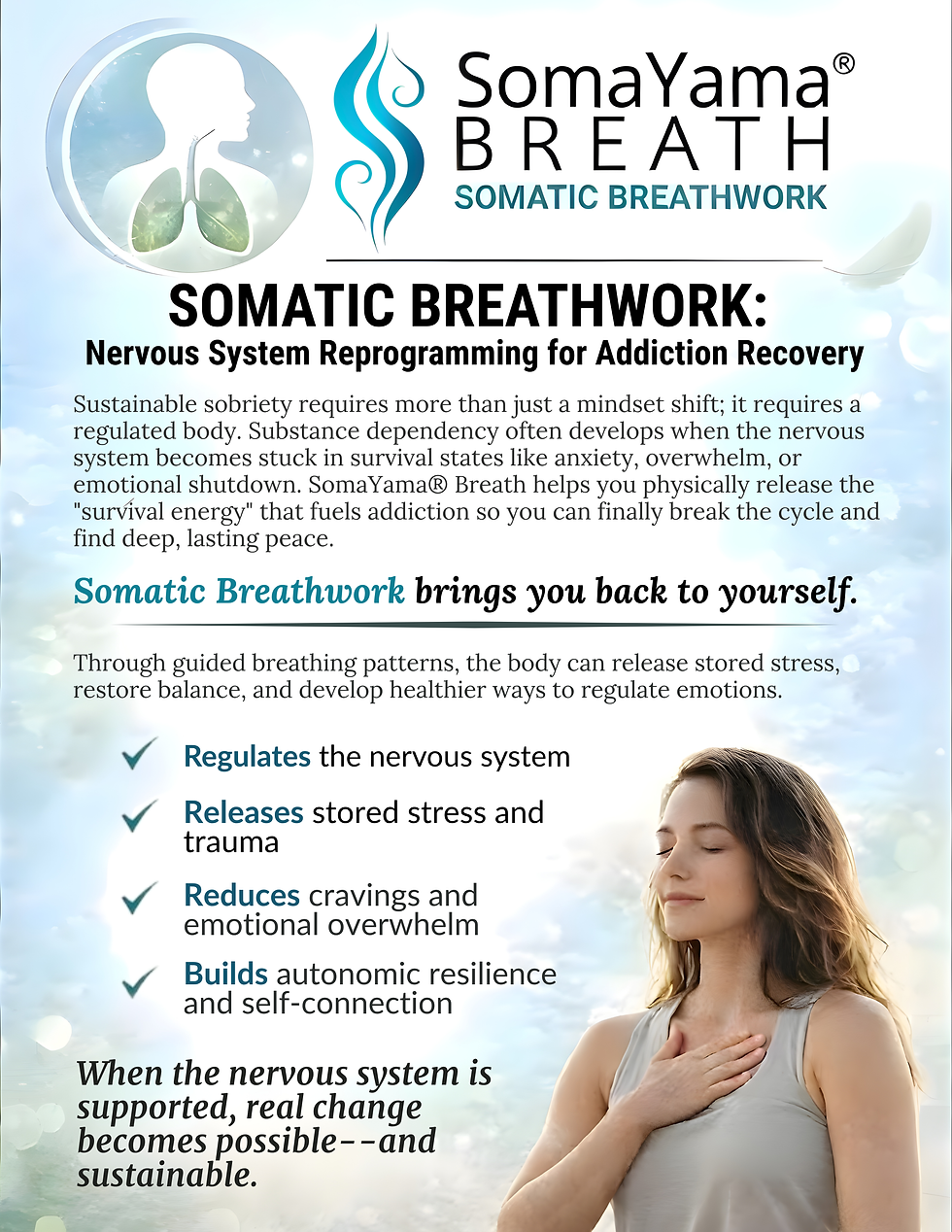
Somatic Breathwork is a powerful therapeutic practice that, at its core, is all about activating and toning your Vagus Nerve. By intentionally shifting your breathing patterns, you are sending a direct signal to your brain that it's safe to relax.
Here’s the science behind how it works:
· The Inhale/Exhale Feedback Loop: Your breathing is directly linked to your heart rate. By consciously making your exhale longer than your inhale, you are deliberately activating your Vagus Nerve. This sends a strong, undeniable message to your brain: "I am safe. The threat has passed. It's time to rest and recover."
· Diaphragmatic Breathing: Our certified SomaYama® practitioners guide you in belly (diaphragmatic) breathing. The diaphragm, a large muscle under your lungs, is directly connected to the Vagus Nerve. When you breathe deeply from your diaphragm, the physical movement of this muscle gently "massages" the Vagus Nerve, further stimulating it and activating the calming parasympathetic response.
· Toning the Vagus Nerve: Consistent practice of these breathing techniques helps to "tone" the Vagus Nerve, much like exercising a muscle. A well-toned Vagus Nerve means your body is more resilient and adaptable. It can more quickly and efficiently transition from a state of stress to a state of calm, reducing the long-term impact of chronic stress and trauma.
By engaging in Somatic Breathwork, you are not simply taking a deep breath; you are scientifically and intentionally engaging with the very core of your nervous system to promote profound physical and emotional healing.
We have witnessed firsthand the incredible effects of Vagus Nerve activation through Somatic Breathwork. We often see clients walking in with anxiety and uncertainty; after a session, they tell us they feel relaxed and focused for extended periods of time. Others come in carrying past trauma, and through this work, they experience profound understanding and release—all direct effects of activating the Vagus Nerve through a guide session of Somatic Breathwork
Ready to Find Your Inner Calm?
We're Norm and Toni, and we know firsthand what a profound difference this work can make. Our own paths to healing led us here, and it’s our greatest joy to share this practice with you.
If you're ready to unlock the potential we've found within ourselves and begin your own healing journey, we invite you to connect with us.
Visit our website to learn more about our 1-on-1, group, and custom sessions. We're here to help.


Comments